

How to Choose the Best Online Course for Your Career Goals: A Step-by-Step Guide
Picking an online course sounds simple until you open a search tab and find thousands of options, each promising to transform your career. The real challenge is not finding courses — it is finding the right course for where you want to go. This guide walks you through a practical, step-by-step process so you can stop browsing and start learning with purpose.
Start With Your Career Goals, Not the Course Catalog
Before comparing syllabi or reading reviews, define what career outcome you are actually working toward. A course is only as valuable as the goal it serves, and enrolling without a clear destination is the fastest way to waste both time and money.
Ask yourself three concrete questions:
- What specific role, industry, or responsibility do I want to reach within the next one to three years?
- Am I trying to advance in my current field, transition into a new one, or build a complementary skill set?
- What does success look like — a promotion, a career change, freelance work, or simply greater confidence in a skill?
Career changers and upskilling professionals need different things from an online course. Someone pivoting from marketing to data analysis needs foundational technical training. Someone already in data who wants a leadership role needs a different curriculum entirely. Getting this distinction right before you browse saves hours of comparison later.
Conduct an Honest Skill Gap Analysis
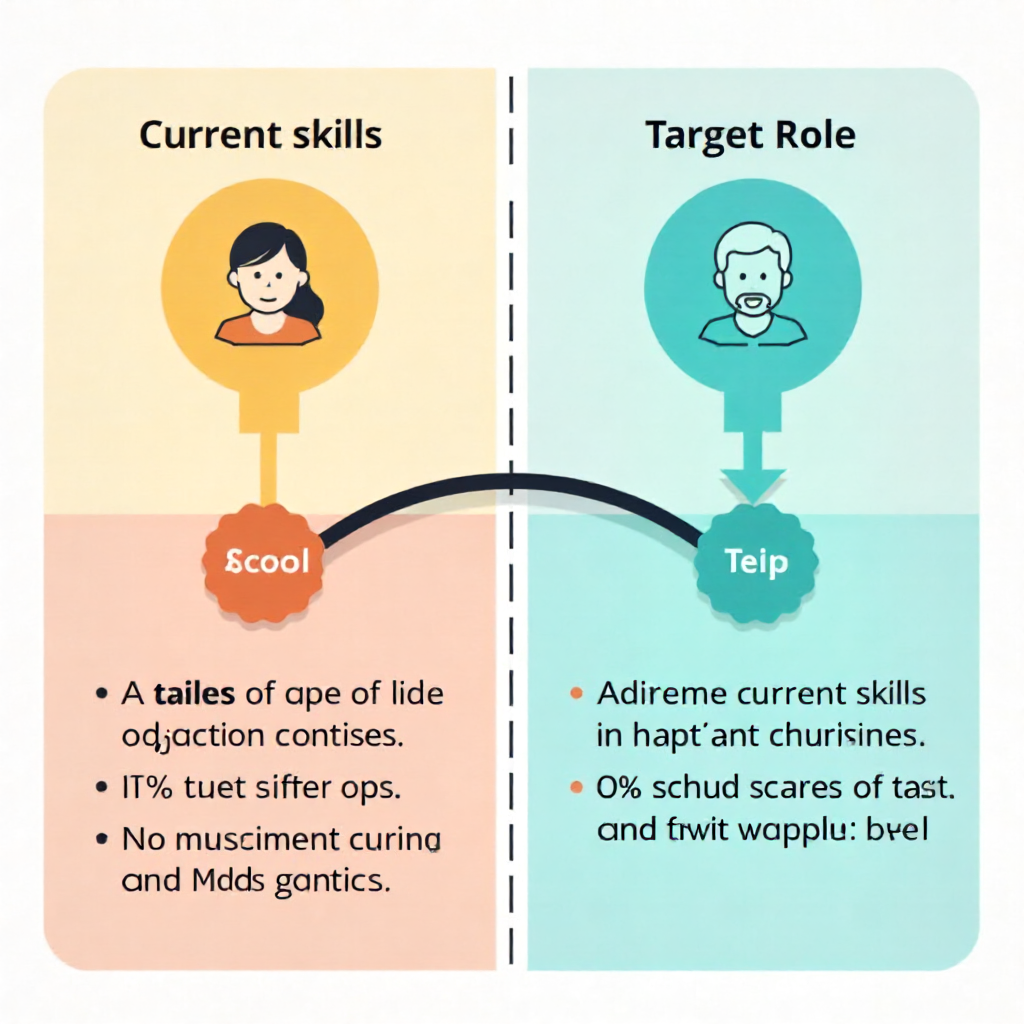
A skill gap analysis means comparing what you can do today against what your target role actually requires — and being honest about the distance between the two. This step turns vague ambition into a specific learning agenda.
Start by researching three to five job postings for the role you want. List the skills, tools, and qualifications that appear repeatedly. Then map those against your current experience. The overlap is your existing foundation. The gaps are your curriculum.
For example, if project management roles consistently list Agile methodology, stakeholder communication, and risk assessment, and you only have experience with the last two, your course search should focus on Agile frameworks — not a broad project management overview that rehashes what you already know.
This approach keeps your enrollment decision tied to real market demand rather than course marketing copy. It also helps you avoid over-investing in a long program when a targeted short course would close the gap faster.
What to Look for in a Course Curriculum
A strong course curriculum reflects current industry practice, progresses logically, and covers the specific competencies your target role requires. Depth matters more than length.
When reviewing any syllabus, look for these signals:
- Practical application: Does the course include projects, case studies, or assignments that mirror real work tasks?
- Current tools and frameworks: A data course that still focuses on outdated software, or a marketing course that ignores recent algorithm changes, signals that the content has not kept pace with the industry.
- Clear learning outcomes per module, not just vague topic titles
- A logical progression from foundational concepts to applied skills
One practical test: take the course's listed outcomes and compare them directly to the job description requirements you identified during your skill gap analysis. If the curriculum covers 70% or more of your identified gaps with appropriate depth, it is worth serious consideration. If it only skims the surface of topics you need to master, keep looking.
Accreditation, Certification, and Employer Recognition
Not all credentials carry equal weight with employers, and understanding the difference can significantly affect your career outcomes. Accreditation refers to formal recognition by an educational authority; certification typically signals demonstrated competency in a specific skill or domain.
For career advancement purposes, what matters most is employer recognition — whether the hiring managers and recruiters in your target industry actually value the credential. A certificate from a well-regarded professional body in your field often carries more practical weight than an accredited course from an institution with no name recognition in that sector.
Research this before enrolling. Look at LinkedIn profiles of people currently working in your target role and note which credentials appear. Check whether professional associations in your industry endorse specific programs. The U.S. Department of Education's accreditation database is a useful starting point for verifying institutional credentials in the United States.
One honest caveat: a certificate alone rarely gets someone hired. It signals commitment and baseline competency, but employers also look at portfolios, demonstrated projects, and relevant experience. Treat certification as one component of your career advancement strategy, not the whole strategy.
Choosing the Right Learning Format for Your Lifestyle
The best learning format is the one you will actually complete. Self-paced, cohort-based, and instructor-led courses each suit different schedules, learning styles, and levels of motivation.
Self-paced courses offer maximum flexibility — you set the schedule and move at your own speed. This works well for disciplined learners with unpredictable schedules. The trade-off is that without external accountability, completion rates drop sharply. Research consistently shows that self-paced learners complete courses at significantly lower rates than those in structured programs.
Cohort-based programs run on a fixed schedule with a group of peers moving through the material together. The built-in accountability and peer interaction tend to drive higher completion and richer learning, but they require committing to specific session times — which does not suit everyone.
Instructor-led courses with live sessions offer direct access to an expert and real-time feedback. They are particularly valuable when the subject matter is complex or when you expect to have questions that pre-recorded content cannot answer.
Ask yourself honestly: Do you finish things you start independently, or do you need structure and deadlines? The answer should drive your format choice more than the course content alone.
How to Evaluate a Course Before You Enroll
Before committing money or time, run every course through a short vetting process. Most platforms provide enough information to make a confident assessment without enrolling first.
Work through this checklist:
- Preview available content: Many courses offer free sample lessons. Watch at least two to judge pacing, production quality, and whether the instructor's teaching style matches how you learn.
- Review the full syllabus: Not just the topic titles — look at what each module actually covers and what assignments or assessments are included.
- Check instructor credentials: Does the instructor have relevant professional experience, not just academic credentials? For applied skills, practitioners often teach more effectively than theorists.
- Read learner reviews carefully: Look for patterns in negative reviews, not just the overall rating. Complaints about outdated content, poor support, or misleading descriptions are red flags. Praise for practical applicability is a green flag.
- Understand the refund policy: A course with a clear, fair refund window signals confidence in its quality. One with no refund option deserves extra scrutiny.
- Confirm the time commitment per week against your actual schedule — not your optimistic schedule.
If a course does not provide a syllabus, instructor background, or any learner testimonials, treat that as a significant warning sign regardless of how compelling the marketing is.
Making Your Final Decision With Confidence
Once you have worked through the steps above, the enrollment decision becomes much simpler. You are not choosing between courses anymore — you are choosing the one that best fits a clearly defined set of criteria.
Use this three-part filter to make the final call:
- Relevance: Does this course close the specific skill gaps tied to my career goal?
- Credibility: Is the curriculum current, is the instructor qualified, and does the credential carry weight in my target industry?
- Fit: Does the format, time commitment, and cost align with my real life — not an idealized version of it?
If the answer to all three is yes, enroll. If one element is uncertain, go back to the relevant section of this guide and gather more information before committing.
Career advancement through online learning is genuinely achievable, but it requires choosing deliberately. The learners who see real results are not the ones who enroll in the most courses — they are the ones who enroll in the right course at the right time and follow through.
Frequently Asked Questions
How do I know if an online course is worth the cost?
Compare the course cost against the salary difference or career opportunity it could unlock. A $500 course that helps you qualify for a role paying $15,000 more per year has an obvious return. Also check whether the platform offers a free trial or money-back guarantee — these reduce the financial risk of trying a course before fully committing.
Is a certificate from an online course recognized by employers?
It depends on the issuing organization and the industry. Certificates from well-known professional bodies and established learning platforms are increasingly recognized, particularly in technology, business, and healthcare fields. The safest approach is to research what credentials hiring managers in your specific target role actually look for before investing in any program.
How long does it typically take to complete an online course?
Short skill-focused courses typically run two to eight weeks at a few hours per week. More comprehensive programs — covering a full domain like digital marketing or software development — can range from three to twelve months. Always check the estimated weekly time commitment in the course details and be realistic about what your schedule can sustain.
Can I switch careers with just one online course?
Rarely, but it depends on how large the career shift is. A single course can open doors when the transition is adjacent — for example, moving from sales into sales operations. A major pivot, such as from teaching to software engineering, typically requires a structured sequence of courses, portfolio projects, and practical experience. One course is often the right starting point, not the complete solution.
What's the difference between a course and a full online degree program?
An online course is typically a focused, skill-specific program that can be completed in weeks or months. A full online degree program leads to an accredited academic qualification — a bachelor's or master's degree — and takes years to complete. Courses are better suited for targeted upskilling and career pivots. Degree programs are more appropriate when the role requires formal academic credentials or when you are building a long-term academic foundation in a field.