

The Psychology of Effective Online Learning: How to Stay Motivated and Focused
Online learning promises flexibility and autonomy. What it doesn't advertise is how psychologically demanding that freedom actually is. Without a classroom to walk into, a professor to disappoint, or peers to keep pace with, the entire burden of staying engaged falls on you. Understanding why that's hard — not just accepting that it is — is the first step toward doing something about it.
Why Online Learning Demands More from Your Brain
Online learning places significantly higher psychological demands on learners than traditional classroom settings because it strips away most of the external structure that normally regulates attention and behavior. In a physical classroom, social cues, scheduled sessions, and physical presence all work quietly in the background to keep you engaged. Online, those scaffolds disappear.
This matters because the human brain is wired to conserve energy. When there's no external pressure to pay attention, the default-mode network — the part of the brain responsible for mind-wandering — tends to take over. You're not lazy. You're fighting a neurological current.
Cognitive load compounds the problem. Every online session involves managing the learning content itself plus navigating the platform, filtering digital distractions, and self-monitoring your own attention. That's a lot of mental overhead before you've absorbed a single new concept. Research in educational psychology consistently shows that high extraneous cognitive load — mental effort spent on things other than the actual learning — directly undermines retention and comprehension.
Recognizing this isn't an excuse. It's a diagnosis. And diagnoses point toward solutions.
The Role of Intrinsic Motivation in Long-Term Learning
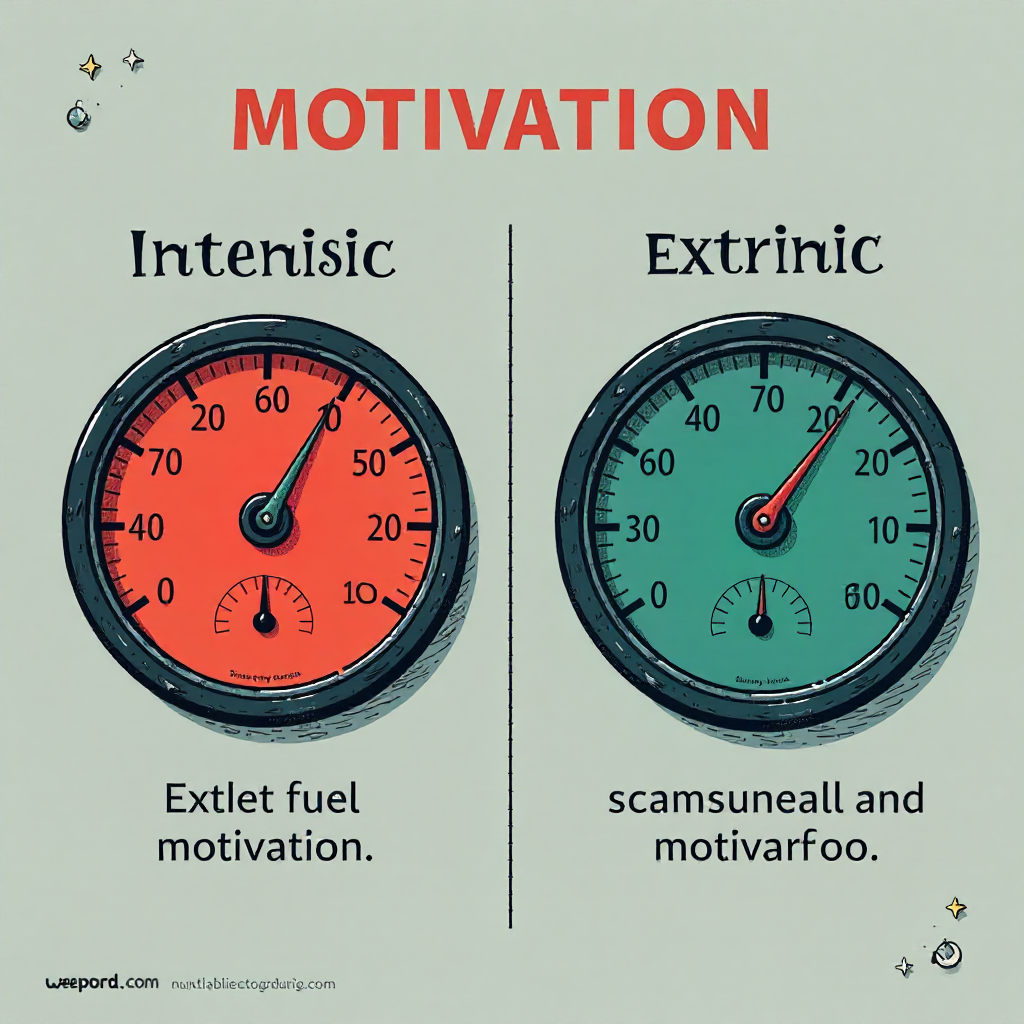
Intrinsic motivation — learning because you genuinely want to grow, understand, or master something — is the most reliable predictor of sustained engagement in online environments. Extrinsic motivators like grades or certificates can get you started, but they rarely carry you through the difficult middle stretch of a course.
Psychologist Edward Deci's self-determination theory identifies three core needs that fuel intrinsic motivation: autonomy (feeling in control of your learning), competence (sensing that you're making real progress), and relatedness (feeling connected to others or to a meaningful purpose). Online learning naturally supports autonomy — you choose when and how you study. The challenge is engineering the other two.
One practical way to strengthen intrinsic motivation is to connect each study session to a specific personal reason. Not "I need to finish this module" but "I'm learning this because I want to change careers" or "because this topic genuinely fascinates me." That distinction sounds small. Psychologically, it's significant — it shifts the locus of control inward, which is exactly where sustained motivation lives.
How to Set Goals That Actually Keep You on Track
Effective goal-setting in online learning means breaking large, distant objectives into smaller milestones that provide regular feedback and a sense of forward movement. A goal like "complete this course" is too abstract to motivate daily behavior. A goal like "finish two lessons and summarize the key points before Thursday" is actionable and measurable.
The psychological mechanism here is straightforward: progress itself is motivating. Researchers Teresa Amabile and Steven Kramer call this the progress principle — even small wins activate a sense of momentum that makes the next session easier to start. Without visible milestones, online learners often feel like they're running on a treadmill: moving but not arriving anywhere.
A practical framework worth adopting:
- Weekly anchors — one clear, achievable goal per week that you can check off completely
- Session intentions — a single specific outcome for each study block ("understand the difference between X and Y")
- Monthly reviews — a brief self-assessment of what you've retained and where gaps remain
This structure replaces the external deadlines that a classroom provides with self-imposed ones that are just as real — if you take them seriously.
Managing Cognitive Load and Reducing Digital Distraction
Reducing cognitive load and protecting your attention from digital distraction are two of the highest-leverage changes an online learner can make. The strategies are simple in principle and harder in practice — because the same device you're learning on is also the world's most sophisticated distraction machine.
On the cognitive load side, the key is chunking: breaking new material into smaller, logically connected pieces rather than trying to absorb large volumes in one sitting. Cognitive science supports studying in focused blocks of 25–45 minutes followed by short breaks, a rhythm that aligns with how working memory consolidates information. Trying to push through fatigue doesn't build discipline — it builds interference.
For digital distraction, the most effective approach is environmental design rather than willpower. Closing unnecessary browser tabs, silencing non-essential notifications, and using a dedicated study space (even a specific chair) all work by reducing the number of decisions your brain has to make during a session. Willpower is a finite resource. Your environment can either drain it or conserve it.
Spaced repetition is worth highlighting here as well. Rather than reviewing material once and moving on, spacing review sessions over increasing intervals — one day later, then three days, then a week — dramatically improves long-term retention. This technique works because it forces retrieval at the moment forgetting is about to occur, which strengthens the memory trace each time.
Building Self-Regulation Habits for Consistent Progress
Self-regulated learning is the ability to plan, monitor, and adjust your own learning process — and it's the skill that separates learners who complete online courses from those who abandon them. In a traditional school, teachers and schedules do much of this regulation for you. Online, you have to build it yourself.
Three habits form the foundation:
- Planning before each session — spending two minutes deciding what you'll cover and how you'll know when you're done
- Self-monitoring during study — periodically asking yourself "am I actually understanding this, or just reading words?"
- Brief reflection afterward — noting what clicked, what didn't, and what needs revisiting
This loop — plan, monitor, reflect — mirrors what expert learners do naturally. It's not glamorous, but it's the difference between passive consumption of content and genuine skill-building. Procrastination, which thrives in the absence of structure, tends to shrink when you have a clear, small next action waiting for you.
Harnessing the Growth Mindset to Push Through Difficulty
A growth mindset — the belief that your abilities are not fixed but can be developed through effort and persistence — is one of the most powerful psychological assets an online learner can cultivate. Psychologist Carol Dweck's research at Stanford showed that learners who interpret struggle as a signal to try differently (rather than as evidence of inadequacy) consistently outperform those who don't, especially in self-directed contexts.
Online learning is full of moments that can trigger a fixed-mindset response: a concept that won't click, a quiz you fail, a session where focus completely evaporates. The growth mindset reframe isn't "this is fine" — it's "this difficulty is information, not a verdict."
One concrete technique: when you hit a wall, write down what specifically is confusing rather than just noting that you're stuck. That act of articulating the gap shifts your brain from emotional reaction to analytical problem-solving. It also gives you a specific question to carry into your next session, which is far more useful than a vague sense of failure.
Creating Accountability and a Supportive Learning Routine
Accountability structures compensate for the social and institutional pressure that in-person learning provides automatically. Without them, online learners are essentially operating on the honor system — which works until life gets busy, which it always does.
Effective accountability doesn't require elaborate systems. Some approaches that consistently work:
- Sharing your weekly learning goal with a friend or colleague who will ask about it
- Scheduling study sessions in your calendar as non-negotiable appointments
- Using a simple paper log to track completed sessions — the visual record creates its own momentum
- Joining a study group or online learning community where others are working toward similar goals
The routine itself matters as much as any individual strategy. A consistent study time — same days, same rough schedule — reduces the mental friction of deciding when to start. Over time, the routine becomes a cue that primes your brain for focused work, similar to how athletes use pre-performance rituals to access a flow state. That deep, absorbed engagement doesn't arrive on demand, but a reliable routine makes it far more likely to show up.
Frequently Asked Questions
Why do I lose motivation so quickly when studying online?
Motivation fades quickly online because most of the external cues that sustain attention in physical classrooms — social presence, scheduled sessions, immediate feedback — are absent. Without those props, motivation has to come from within, which requires deliberate effort to cultivate. Connecting your study sessions to a personal "why" and building visible milestones helps bridge the gap.
How long should an online study session be to stay focused?
Most learners maintain effective focus in blocks of 25–45 minutes, followed by a 5–10 minute break. Longer sessions without breaks tend to produce diminishing returns as working memory becomes saturated. The exact duration varies by individual and task complexity — the key is stopping before focus fully collapses, not pushing through fatigue.
What is the best way to avoid distractions while learning online?
Environmental design beats willpower every time. Close unrelated browser tabs, silence non-essential notifications, and use a consistent physical space for studying. These changes reduce the number of temptations your brain has to actively resist, preserving your attention for the actual learning.
How does a growth mindset help with online learning?
A growth mindset helps online learners interpret difficulty as a normal part of the process rather than a sign they're not capable. This reframe reduces avoidance behavior and keeps learners engaged through the inevitable rough patches. Practically, it means responding to confusion with curiosity rather than discouragement.
Can online learners achieve the same focus as in-person students?
Yes — but it requires actively building the structures that in-person environments provide automatically. Self-regulated learning habits, accountability systems, and deliberate management of cognitive load can fully compensate for the absence of a physical classroom. The learners who thrive online aren't those who find it easier; they're the ones who engineer their conditions more carefully.